
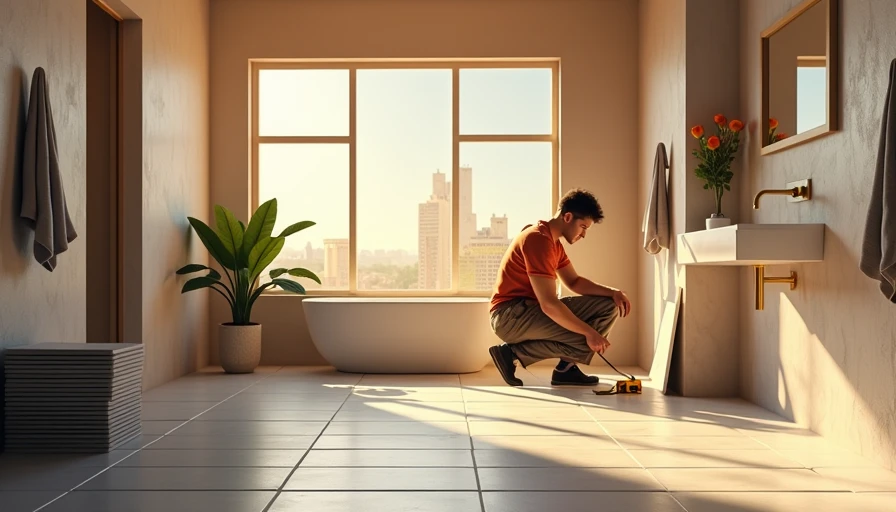
You know the feeling. You walk into a 5x7 bathroom with a good sink and a decent mirror, but the tile is fighting you. Most people think a tiny bathroom needs a full gut renovation to feel bigger. I've designed over 80 bathrooms across LA County, most under 80 square feet, and the one move that changes everything is choosing the right bathroom tile. Not the paint, not the lighting. Tile sets the entire mood. The wrong size, color, or layout can shrink a room that already has no square footage to spare. The right pick can make a 35-square-foot powder room feel like a boutique hotel spa. Here's the step-by-step process I use with every client, from the tile showroom to the grout float.
Why Tile Size Beats Tile Color in a Small Bathroom
When clients show me a Pinterest board, they're obsessed with color. I get it. But in a small bathroom, the size of the tile matters far more than the shade. A large-format tile — 12x24 inches or bigger — means fewer grout lines. Fewer lines mean the eye travels over the surface without stopping, so the wall reads as one continuous plane. I've specified 24x48 rectified porcelain planks from Daltile and MSI in 40-square-foot baths and watched the room feel almost twice its size. Small mosaic hex tiles are the opposite: they add texture and charm, but every grout line is a visual stop sign. In a tiny bathroom, those stops add up and make the walls feel busier and closer.
The Two Colors That Actually Work in Tiny Bathrooms
I'm not going to tell you white is the only answer. White subway tile is a classic for a reason — it reflects light and disappears. But a warm ivory or a soft greige can feel even more layered and expensive because it doesn't glare. My two default colors for small bathrooms are a warm ivory, like Bedrosians' Cloe in Macchiato, and a pale sage green, which adds calm without darkening the room.
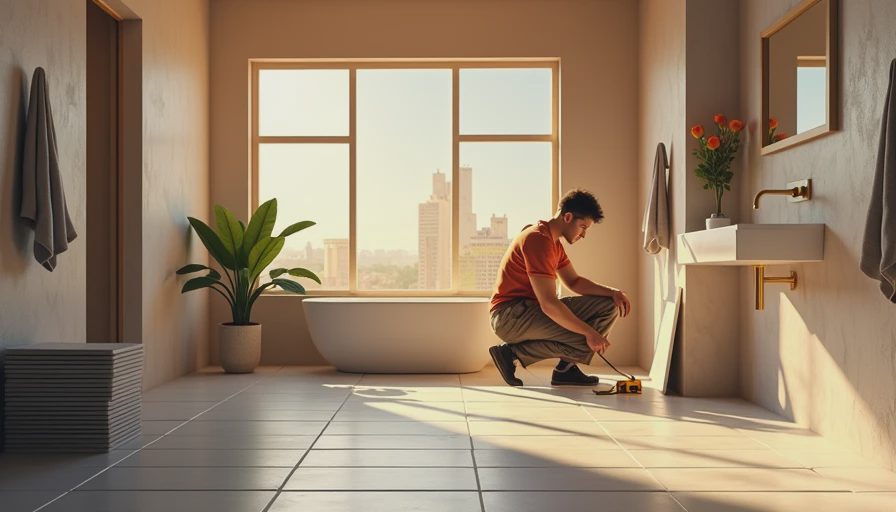
Dark tile? Keep it for a single accent wall behind the vanity if you really want drama. A full box of dark porcelain in a 5x7 room makes it feel like a cave — I've seen clients regret it within a month.
Tile Layouts That Trick the Eye (and Save Your Back)
Layout is the free upgrade. Running bond and herringbone are the most common, but for a small bathroom I usually steer clients toward a straight stack or an offset pattern with a 1/3 overlap. Why? A horizontal offset draws the eye side to side, which makes a narrow room feel wider. Herringbone adds a lot of visual energy, but in a tight space it can feel busy and also creates more cuts — which means more tile waste and a higher install bill. If you love the look, confine it to the shower niche or the floor and keep the walls simple. A vertical stack, on the other hand, pushes the eye upward and makes low ceilings feel taller. This is the trick I used on an Echo Park bungalow whose bathroom felt like a submarine — a 4x12 tile installed vertically, and suddenly the ceiling felt a foot higher.
Grout: The Underrated Decision That Can Ruin Your Tile
Here's where bathroom tile projects go sideways. Light tile with dark grout gives you a bold grid that visually chops the wall into tiny squares. That's the last thing a small bathroom needs. Match your grout to the tile color — or go one shade lighter — and the tile surface blends into one clean field. For floors, avoid bright white grout unless you plan to scrub it every weekend. A warm gray or a greige grout hides soap scum and dust far better. I often recommend Laticrete or Mapei grout to my clients because they cure with consistent color and resist staining. And if you're using large-format tile, specify a 1/16 or 1/8 inch grout line. A fat 1/4 inch joint automatically adds visual heaviness.

Big Tile, Small Room: When to Break the Rules
I just spent two sections telling you to go big and keep things light. Now here's the nuance. Sometimes the best bathroom tile is the one that makes you smile every morning, even if it's a little moody. I had a client in a Santa Monica condo who wanted dark green zellige tile, and I talked her down from covering all four walls to doing just the wall behind the vanity. The result: a deep, glossy accent that made the white fixtures pop, and the small bathroom still felt open. The rule is to limit the bold choice to one wall, or to the shower floor, and let the rest of the room breathe. That's how you get personality without sacrificing the illusion of space.
The Money Talk: What Tile Really Costs in a Small Bathroom
You don't need a full gut renovation to replace bathroom tile, but you do need a realistic budget. For a standard 5x7 bathroom, tile alone typically runs $400 to $1,200 for materials, depending on whether you pick ceramic, porcelain, or designer stone. At the low end, a big-box ceramic tile in a 12x24 size could cost around $2 to $4 per square foot. At the high end, a handcrafted zellige from Clé or Fireclay can run $15 to $30 per square foot, and that's just for the tile, not the install.
Labor for a small bathroom tile job — demo, prep, and setting — usually lands between $1,500 and $3,500 in Los Angeles. Mixing a mid-priced porcelain on the walls with a slightly more expensive accent tile on the shower floor is the budget move I recommend all the time. You get the high-end look exactly where the eye lands, and you keep costs under control.