

The right bathroom light fixtures do more than brighten a mirror; they decide whether a small bath feels sharp or sloppy. In a 5x7 room, the wrong fixture can make the ceiling feel lower, the vanity feel cramped, and every morning routine feel harsher than it needs to be. I think about this the same way I think about storage: the best choice is rarely the biggest or the fanciest one. It is the one that fits the room, the mirror, and the way the room is used.
Start with the mirror and the vanity width
When I plan bathroom light fixtures, I start with the mirror and the vanity width. A 24-inch vanity wants a different answer than a 36-inch vanity, and a single oversized bar light can look clumsy over a narrow sink. For small baths, I like to think in pairs. Two sconces flanking a mirror often give better face lighting than one fixture above it, because the light comes from both sides instead of from the top. That means fewer shadows under the eyes and less of that washed-out look you get from one bright bulb in the middle.
A useful rule: keep fixture scale honest. On a 30-inch vanity, a 24- to 28-inch mirror with two sconces about 5 to 8 inches wide usually feels balanced. If the ceiling is low, a shallow vanity bar or a compact globe fixture can work, but only if the proportions stay tight. I also like the center of the light source to land around 60 to 66 inches from the floor, which puts the beam near eye level for most adults. That one measurement solves a lot of awkward guessing.
For renters, this is where plug-in sconces and battery options can buy you flexibility. They are not as elegant as hardwired pieces, but in a room with no outlet plan and no renovation budget, they can still make a tired bath feel edited instead of improvised.

Choose the fixture type that solves the real problem
A lot of bathroom light fixtures fail because they try to do everything at once. The vanity needs clean task light. The ceiling needs general light. The room itself needs softness so it does not feel like a locker room. Once you separate those jobs, the room gets easier to shop.
For a small bath, I usually look at three categories. Sconces are the most flattering at face level, especially if they use frosted glass or opal shades. A bath bar is the quickest fix when wall space is tight, and it works well above a wider mirror. A flush mount or semi-flush ceiling fixture handles the ambient layer, which matters more than people think in a windowless room. If you only replace one thing, replace the light at the mirror. That is where people notice the difference first.
Brand-wise, you can find solid options from Kichler, Schoolhouse, Rejuvenation, Hudson Valley Lighting, and Visual Comfort, but the winning move is still checking scale first and style second. A good shape in the wrong size looks worse than a plain shape in the right size. In a small bathroom, that is not a philosophical point. It is the whole game.
Finish matters too. Polished chrome reads crisp and is easy to pair with white tile and nickel hardware. Matte black gives contrast, but it can feel heavy if every other element is dark. Unlacquered brass or aged brass warms up marble, creamy paint, and wood vanities, but I would not force it into a room that already has busy tile and warm floors. Let one finish lead and let the fixture support it.
Get the light quality right, not just the style
If you are replacing old bathroom light fixtures, the cheapest upgrade is often not the fixture itself but the bulb. Warm-white bulbs in the 2700K to 3000K range keep skin tones from looking gray. I also look for a CRI of 90 or higher when possible, because higher color rendering makes makeup, shave lines, and tile color look more accurate. That sounds technical, but the effect is simple: you look more like yourself in the mirror.
Dimmers are worth it in almost every small bath. They let a bright morning routine and a softer evening bath live in the same room without a second fixture. And if the room gets steamy, check the rating. Damp-rated fixtures are the safer baseline near moisture, while anything inside a shower zone needs wet-rated hardware. That is not a place to bargain hunt. I have seen cheap finishes pit, yellow, or rust fast, and once that happens, the whole room looks tired.
A final caution: avoid fixtures that throw light straight at the mirror in a way that creates glare. Clear glass can be beautiful, but if the bulb is exposed and positioned badly, it becomes all shine and no function. In a tiny room, glare feels like clutter.
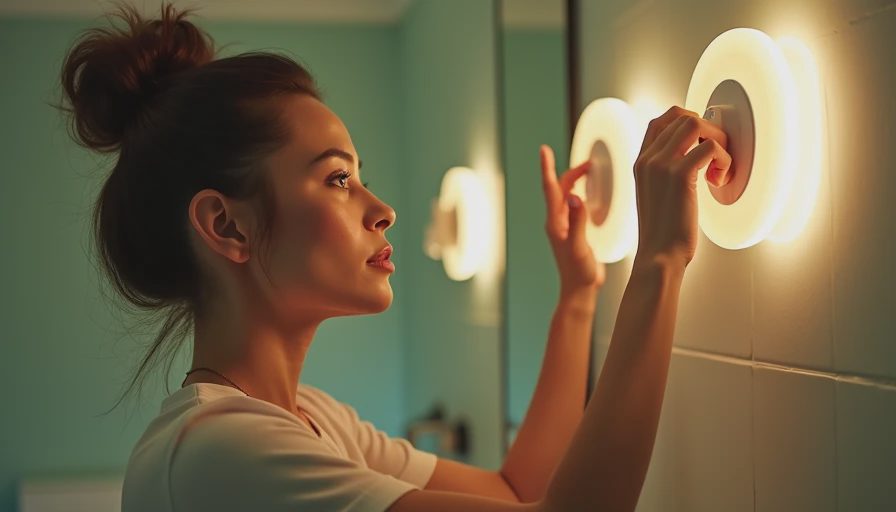
Make the budget work like a designer would
Good bathroom light fixtures should make the room feel larger, cleaner, and more intentional. That does not require a luxury order sheet. It just requires spending in the right places. A builder-grade swap can run about $60 to $150 for the fixture, while a stronger design-forward piece often lands in the $150 to $400 range. If you need new wiring, expect installation to add a few hundred dollars more, especially if a wall has to be opened or a junction box has to move.
Here is how I would spend the money in a small bath: put the most on the fixture that frames the mirror, choose a simple ceiling light that does not fight it, and save the drama for the rest of the room through paint, towel texture, or hardware. In a 35-square-foot powder room I worked on, we skipped the oversized pendant the homeowner wanted and used a slim brass bath bar with an opal glass flush mount. The room instantly felt taller and calmer, and the mirror stopped looking like it was floating in a cave.
If you are shopping online, compare dimensions before style photos. Look at width, projection, and height together. If a fixture sticks out too far, it can make a narrow walkway feel tighter. If it is too small, it disappears and the room reads unfinished. That is why the best bathroom light fixtures are usually not the loudest ones. They are the ones that make every other part of the room easier to look at.
If you want, I can turn this into a room-by-room shopping guide next: powder room, 5x8 bath, or primary bath.