

Bathroom accessories are where a small bath either starts looking intentional or stays stuck in “rental special” mode. In a room under 80 square feet, every object has to earn its place. That does not mean you need a full renovation or a fancy custom cabinet. It means choosing a few pieces that solve daily annoyances, reduce clutter, and make the room read as finished the second you walk in. The right towel bar, soap dispenser, mirror, and storage can do more for the space than another round of paint ever will.
How to choose bathroom accessories that actually earn their square footage
The best bathroom accessories in a tight room do three jobs at once: they hold something, they clean up the visual clutter, and they match the scale of the room. A 24-inch towel bar works in many small primary baths, but a powder room often looks better with a single hook or a pair of hooks instead of a bar that eats wall space. A soap dispenser from Simplehuman or Umbra keeps the counter calmer than three different bottles. A tray under the sink or beside the faucet corrals the things people reach for every day, which is what keeps a small vanity from turning into a landfill of half-used products.
I like to think in terms of sight lines. If you can see a dozen loose items from the doorway, the room feels busy even when it is clean. If you can see just a few deliberate pieces, the room feels edited. That is why I usually tell clients to buy fewer, better pieces instead of one matching set with a toilet brush, cup, and trash can all in the same finish. Most of those sets are too tall, too shiny, or too cheap-looking for a compact bath. One good towel hook, one good mirror, and one good dispenser usually beats seven matching pieces.
If the room has a pedestal sink, the counter opportunity disappears, so the wall space matters more. If it has a narrow vanity, look for a rectangular tray about 10 by 14 inches, a lidded cotton pad box, and a wall-mounted tissue holder. Those details sound minor, but they stop the room from feeling improvised.

Storage moves that work when the vanity is tiny
When the vanity is shallow, storage has to move upward or inward. An over-the-toilet shelf with a depth of 7 to 9 inches can hold baskets without crowding the toilet. A slim ladder shelf looks better than a bulky cabinet in most apartments because it gives you vertical storage without blocking light. Under the sink, clear bins from iDesign or OXO help more than one big tote because you can pull a bin out, grab what you need, and slide it back without unpacking the whole cabinet.
This is also where the wrong bathroom accessories make a room feel smaller. Anything too deep creates a stump effect, especially near the toilet or beside the vanity. In a 5-by-7 layout, even a 12-inch-deep cabinet can feel aggressive if the door swing is already tight. That is why shallow wall shelving, adhesive hooks, and stackable bins often outperform a prettier but bulkier storage piece. If you rent, command-style hooks and removable strips are worth the money because they let you make the room work without drilling into tile.
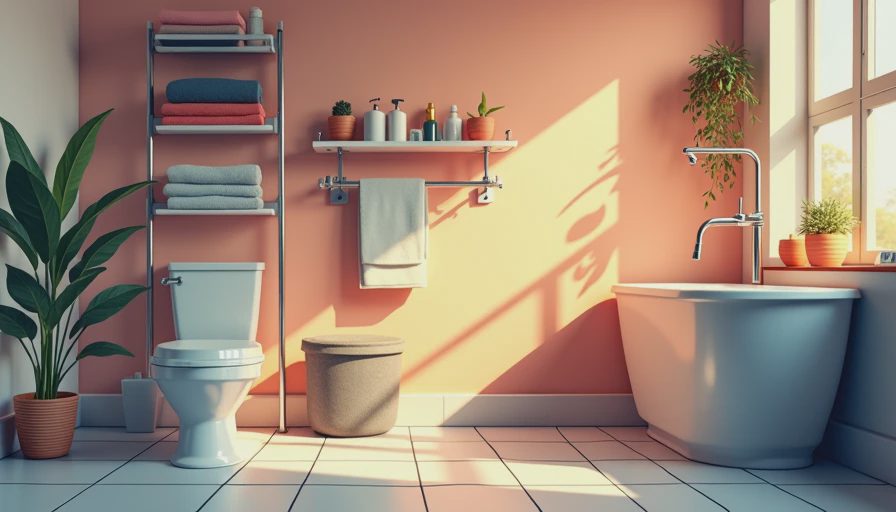
Mirrored cabinets are useful when the wall can handle them. A 24-by-30 or 30-by-36 cabinet can hide skincare, toothpaste, and first aid without adding another freestanding object. If the room gets decent natural light, an open shelf above the toilet can feel lighter, but keep it edited: towels, one small plant, and one basket are usually enough.
Materials, finishes, and brands that survive steam
Humidity is hard on cheap finishes, so the material matters more than the logo. Brushed nickel, polished chrome, and stainless steel hold up well and are easy to clean. Matte black still looks sharp, but it shows hard-water spots faster, especially on towel bars and faucet handles. Powder-coated aluminum is a smart middle ground for hooks and shelves because it stays light visually and usually costs less than solid metal. Teak, bamboo, and sealed oak can work too, especially on trays and bath mats, but they need a little more care.
For shoppers, the sweet spot is usually somewhere between Target, IKEA, West Elm, Schoolhouse, and CB2. You can find a towel hook for under $20, a good mirror for $100 to $250, and a more refined dispenser or tray for $30 to $80. In that range, the room starts to look pulled together without crossing into overdesigned territory. If you want a warmer look, try brass on a smaller scale, like a hook or tissue holder, rather than committing every fixture to the same metal.
The finish story matters because tiny rooms amplify mistakes. A scratched chrome bar in a large bath disappears; in a small bath, it reads immediately. So buy the pieces you touch daily with the same care you would give a faucet. That is the quiet difference between ordinary and intentional bathroom accessories.
A budget plan that keeps the room from looking pieced together
If you are shopping from scratch, think in tiers. Around $75 to $125 gets you the basics: a soap dispenser, a towel hook or bar, a tray, a trash can, and one storage basket. Around $200 to $350 lets you upgrade the mirror, replace mismatched hardware, and add a better over-the-toilet shelf or wall cabinet. Around $500 and up, you can start choosing more refined materials, like a stone tray, a medicine cabinet with integrated lighting, and coordinated metal finishes that make the room read like a single design decision instead of a weekend errand run.
The easiest way to avoid a patchwork look is to commit to one finish family and one material family. Chrome and white resin feels clean and classic. Brass and stone feels richer. Black and wood feels more architectural. Mix too many textures and the room starts to feel busy fast. A small bath is not the place to show off every trend in the aisle.
A smart set of bathroom accessories can also stretch an old room while you save for bigger work. I have seen a basic apartment bath jump from forgettable to polished with a $180 spend: a better mirror, two hooks, a new dispenser, a woven basket, and a small shelf over the toilet. No plumbing moved, no tile touched, but the room finally felt cared for.
What I would do first in a 5-by-7 bathroom
If I were starting with a blank 5-by-7 bath, I would begin with the pieces people touch every day, then deal with storage, then layer in style. First, the mirror and light. Then one towel solution, not three. Then a dispenser, trash can, and tray. After that, I would look at the wall above the toilet and the space under the sink to see where closed storage could disappear visually. That order matters because it keeps you from buying decorative items before the room can actually function.
The final edit is simple: remove anything that duplicates a job. Two soap pumps, three cotton jars, and a stack of extra towels on the vanity will make even a nice room feel crowded. A small bath looks best when the essentials are obvious and the clutter has a place to live. That is the whole game.