

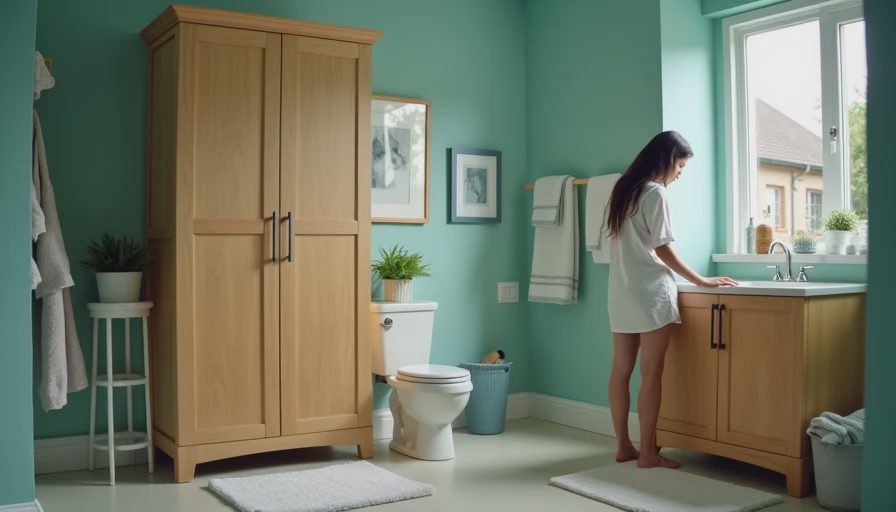
A wood storage cabinet with doors can solve the least glamorous problem in a small bathroom: where everything goes when the counter is only 18 inches deep. In a 5×7 room, storage is not an afterthought. It affects how the door swings, how you move around the toilet, and whether the room feels calm or permanently crowded. The right cabinet hides extra toilet paper, cleaning supplies, towels, and skincare while giving the bathroom a finished architectural detail.
I start with dimensions, not a finish sample. Measure the wall, note the location of outlets and plumbing, and mark the cabinet footprint with painter's tape. That ten-minute test tells you more than an online product photo. A cabinet that looks compact on a screen can project 16 inches into a narrow walkway.
Start with the footprint, not the style
For most small bathrooms, a cabinet between 12 and 24 inches wide is useful without becoming visually heavy. Depth matters even more. A floor cabinet that is 10 to 12 inches deep can hold folded hand towels and everyday supplies; 15 inches is usually the upper limit I would consider near a toilet or tight passage. If you are working with a 30-inch-wide clearance zone, leave enough room for comfortable movement rather than filling every available inch.
Vertical storage is the easiest win. A wall-mounted cabinet that is 24 to 30 inches high can use empty space above the toilet, provided it does not interfere with the shower door or a tall user's head. Keep the bottom at least several inches above the tank and align its top with nearby trim or the mirror when possible. That alignment makes an inexpensive cabinet look intentional.
A narrow linen tower works well beside a vanity, but only if the vanity door can open fully. In one 5×7 layout, shifting a 20-inch tower 3 inches away from the corner made the difference between a functional drawer and a drawer that hit the toilet.

Choose doors that earn their swing
The door style determines whether your storage feels effortless. Standard hinged doors need clear space in front of them, so they work best on a wall opposite an open walkway. If the cabinet sits beside the vanity, a pair of smaller doors can be easier than one wide door because each leaf requires less swing clearance. Check the hinge side before ordering; a beautiful cabinet is useless if its door blocks the light switch.
Sliding doors are practical above a toilet or in a very narrow room, though their tracks reduce access to part of the interior at any one time. Recessed medicine cabinets with mirrored fronts save wall space, but they are not ideal for bulky bottles or spare towels. For a rental, freestanding pieces are safer because they avoid opening the wall and can move with you.
The phrase wood storage cabinet with doors covers a broad range of construction. Look for solid wood frames, wood veneer over stable plywood, or moisture-resistant engineered wood with sealed edges. Avoid raw particleboard at the floor, where a small leak can cause swelling. In a bathroom, material quality matters more than whether the product carries a premium designer label.
Make the finish work with the room
Light oak, ash, and painted white cabinets keep a small bathroom feeling open. Walnut or medium-stained wood can be striking, but use it as one controlled note rather than repeating a dark finish on the vanity, shelves, and mirror frame. In a windowless room, a warm natural finish adds depth without depending on bright color.
The safest visual approach is to repeat one detail already in the room. If the vanity has flat-front oak doors, choose a cabinet with a similarly simple grain and low-sheen finish. If the room has polished nickel plumbing, use a cabinet pull in the same family. Exact matching is not necessary; shared temperature and scale are enough.
I am cautious about heavily distressed farmhouse cabinets in small bathrooms. Thick crown molding, faux aging, and oversized black hardware add visual noise quickly. A clean slab door or slim shaker profile usually makes the room appear wider. A finish sample is worth taping to the wall for a day so you can see it under both cool morning light and warm evening bulbs.
Organize the inside by frequency
A cabinet is only successful when the contents stay easy to reach. Put daily items between waist and eye level: hand soap refills, face products, and extra washcloths. Reserve the top shelf for occasional supplies such as travel-size bottles or a backup hair dryer. Heavy cleaning products belong on the lowest shelf, preferably in a small leak-resistant bin.
Adjustable shelves are more valuable than decorative backing. A 12-inch interior height can waste space when most of your bottles are 7 inches tall, while two adjustable shelves let you create a useful lower compartment. Add a shallow tray for small items so tweezers and nail clippers do not disappear behind larger containers.
Ventilation deserves attention. Do not store damp towels in a fully closed cabinet unless they can dry elsewhere first. A bathroom cabinet with solid doors should hold dry goods, not wet laundry. If the room has persistent humidity, leave a small air gap around the cabinet and use the exhaust fan during showers and for several minutes afterward.
Shop by budget and construction
Around $100 to $180, you can find compact wall cabinets and simple freestanding units with painted engineered-wood panels. These are sensible choices for renters or a first apartment, but inspect the back panel and door alignment before installation. The low price is not a problem; flimsy hinges and unfinished edges are.
In the $200 to $500 range, expect better hardware, adjustable shelving, stronger frames, and finishes that coordinate more easily with a vanity. Retailers such as IKEA, Wayfair, Home Depot, and West Elm carry different versions of this category, but compare actual dimensions rather than relying on the product name. A cabinet labeled “bathroom storage” can still be too deep for your wall.
Custom cabinetry costs more, often several hundred dollars before installation, but it makes sense when every inch is difficult. A local cabinet shop can build a 9-inch-deep unit around an outlet or match an existing vanity. That precision is valuable in a 35-square-foot powder room, while a stock cabinet is usually the better financial decision in a larger bathroom.
Installation details that prevent regret
Before drilling, locate studs or use anchors rated for the cabinet's loaded weight. A cabinet full of glass bottles is much heavier than an empty box. For a wall-mounted piece, a French cleat or a properly secured mounting rail distributes weight more reliably than two screws through the back panel.
Keep the bottom edge clear of splash zones whenever possible. If the cabinet must sit near a sink, seal exposed edges and use a small bead of appropriate bathroom caulk where water could collect. Do not cover an outlet, block a shutoff valve, or drill where plumbing may run. When mounting above a toilet, center the cabinet to the wall rather than automatically centering it over the tank; the wall's visual balance matters more than a perfect plumbing alignment.
The best wood storage cabinet with doors should disappear into the layout while making the room feel more orderly. Measure twice, protect the clearance around doors, and choose a finish that supports the vanity instead of competing with it. In a small bathroom, that restraint is what makes storage look like design.