
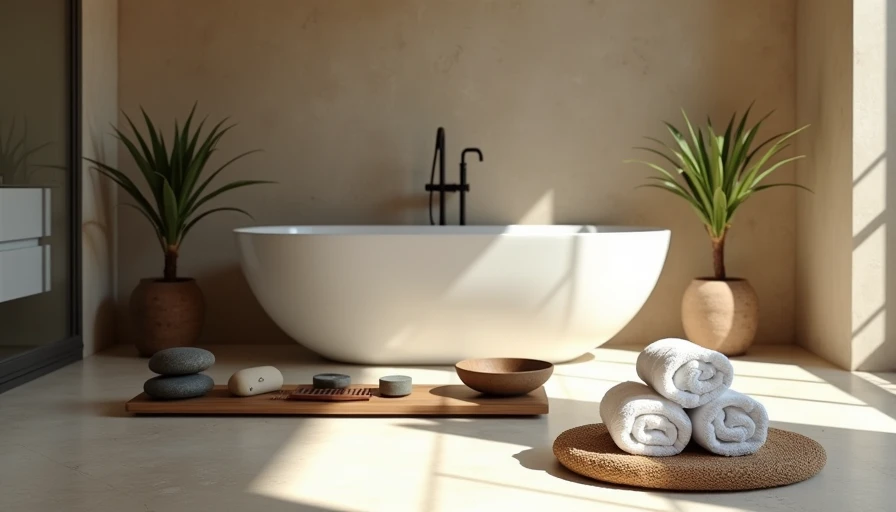
Zen spa bathroom decor is less about buying a matching bamboo set and more about controlling what your eyes, feet, and hands experience in a tight room. In a 5×7 bathroom, every finish is visible, so a restrained palette, soft lighting, and useful storage create more calm than a crowded collection of accessories. The goal is a room that feels deliberate, not themed.
I approach small bathrooms like compact hotel rooms: establish one clear visual direction, protect the walking path, and give ordinary items a beautiful home. You do not need a gut renovation or a $20,000 tile package. Paint, lighting, hardware, textiles, and a few carefully scaled objects can shift the entire atmosphere for a few hundred dollars.
Start with the 5×7 layout
Measure before shopping. A typical 5×7 bathroom has a toilet, a 24- to 30-inch vanity, and a tub or shower occupying most of the perimeter. Keep at least 30 inches of clear space in front of the toilet and vanity when possible. That clearance matters more than adding another decorative stool or oversized basket.
For zen spa bathroom decor, the best layout is visually quiet. A wall-mounted vanity, such as the 24-inch IKEA ENHET or a compact model from Fresca, keeps the floor visible and makes cleaning easier. If replacing the vanity is not practical, remove a bulky cabinet toe-kick or choose a pale wood finish that blends with the floor.
Use vertical space for storage. A 20-inch-wide recessed medicine cabinet can hold daily products without extending into the room. If opening a wall is not an option, a shallow cabinet above the toilet works well, provided its doors do not interfere with the shower. Keep the counter limited to hand soap, a small tray, and perhaps one low plant. Everything else should have a drawer or shelf.
Build a calm material palette
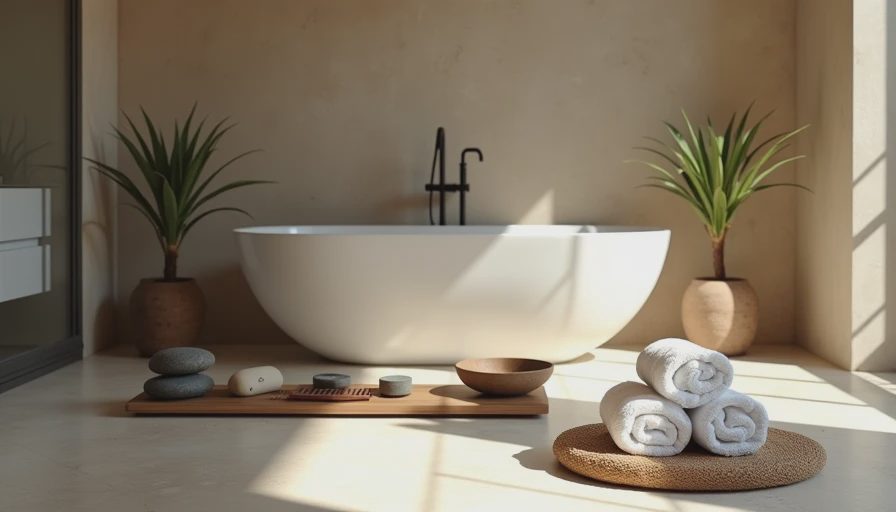
The most convincing zen spa bathroom decor uses texture instead of visual clutter. Start with two or three materials: warm white paint, light oak or walnut, and one stone-like surface. Benjamin Moore White Dove and Sherwin-Williams Alabaster are softer than a stark appliance white, especially under warm bulbs. Test a sample on every wall because north-facing rooms can make pale colors look gray.
For a rental, try removable wood-look adhesive film on a vanity front, a framed mirror, and one substantial cotton bath mat. Avoid faux-stone contact paper with a busy pattern; in a small room, repeated veining can look more chaotic than luxurious. A simple limestone-colored porcelain accessory or matte ceramic soap dispenser gives the same grounded effect at a lower price.
Tile does not need to be replaced to change the mood. Clean the grout, recaulk the tub, and swap chrome accessories for brushed brass, aged bronze, or matte black. Choose one metal and repeat it on the towel bar, faucet, mirror frame, and cabinet pulls. Mixing three finishes in a 35-square-foot room usually reads as accidental rather than collected.
Wood introduces the warmth that spa bathrooms often need, but use it selectively. A teak shower stool, bamboo bath tray, or walnut-framed mirror can work. Do not place untreated wood directly in standing water, and skip a wide ladder shelf if it narrows the route to the toilet. A single 18-inch-wide shelf is usually enough for rolled towels and a small ceramic vessel.
Light is the design decision people skip
No amount of beige tile can fix a bathroom lit by one cold ceiling fixture. Layer the light instead. Install a damp-rated ceiling fixture with a warm color temperature around 2700K to 3000K, then add sconces beside the mirror if wiring allows. Lighting on both sides of the face is more flattering and more functional than one light above the mirror.
For a lower-cost update, replace the bulb first. Look for a high color-rendering index, ideally 90 or higher, so skin tones and tile colors appear natural. Frosted globe bulbs from Schoolhouse, West Elm, or a basic hardware-store line can soften a hard fixture. A dimmer is useful only when the fixture and wiring support it; bathroom products must be rated for damp locations.
Zen spa bathroom decor should feel good in the morning and at night. Use a small plug-in night-light near the floor rather than turning on a bright overhead fixture for a midnight visit. An amber LED bulb or motion-sensor light can provide enough visibility without destroying the room's evening atmosphere.
Choose accessories by scale, not impulse
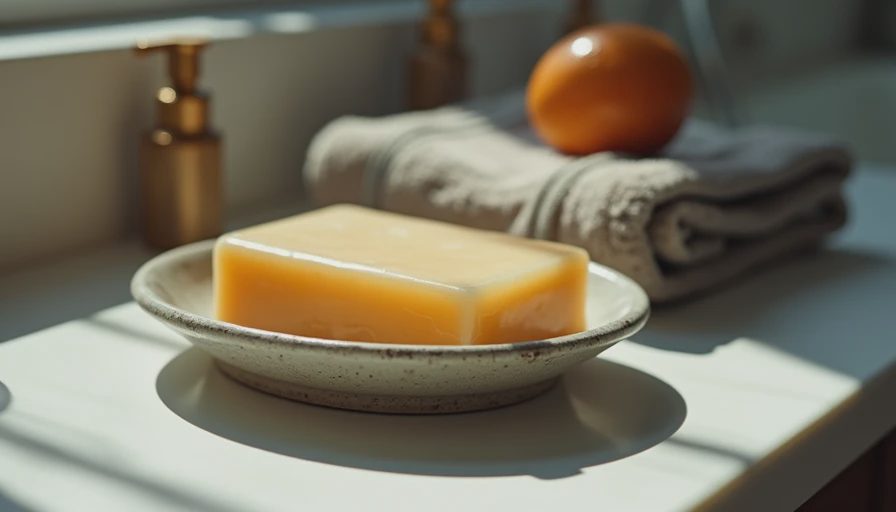
The usual mistake is placing too many small objects on every available surface. A tiny bathroom needs fewer, larger gestures. One 16-inch round mirror often has more presence than a collage of small frames. One oversized white towel looks cleaner than four decorative towels competing for attention.
For zen spa bathroom decor, choose textiles that feel substantial. A 20-by-32-inch cotton or waffle-weave mat gives the floor a soft landing without blocking the door. Two bath towels, two hand towels, and two washcloths are enough for everyday use in a small household. White, sand, clay, and muted sage are easy to coordinate; bright accent colors can make the room feel busier than it is.
Plants can add life, but select for the actual conditions. A pothos on a high shelf tolerates lower light, while a small fern appreciates humidity but needs more consistent moisture. If your bathroom has no window, use a realistic faux plant or a branch in a narrow vase instead of a struggling live plant. Keep greenery away from the toilet tank when possible, where dust and splashes become visible quickly.
A practical weekend upgrade plan
Start by removing everything from the room and photographing the empty space. Notice where the eye lands first and where the walking path feels tight. Patch holes, clean the grout, and repaint before buying decor. These unglamorous steps often deliver more impact than a new soap dish.
Next, replace the brightest offenders: the shower curtain, bath mat, mirror, and light bulbs. A fabric curtain in a quiet solid color can cost $25 to $60, while a framed mirror often falls between $80 and $200. Add matching hardware only after deciding whether the existing faucet must remain. This prevents the common mistake of buying accessories for a finish you later want to replace.
Then add storage at the point of use. Put extra toilet paper in a covered basket or drawer, keep skincare in a medicine cabinet, and reserve the vanity counter for products used every day. Labeling is not necessary; clear zones are enough. In a rental, tension shelves and adhesive hooks can handle light items without drilling, but follow the manufacturer's weight limits.
What to spend on first
If your budget is $150, spend about $50 on a quality curtain and mat, $40 on warm high-CRI bulbs and a night-light, and the remainder on a mirror, tray, or hardware. At $500, add a new vanity light, a better mirror, solid cotton towels, and a teak accessory. At $1,500 or more, consider a small vanity replacement, professional electrical work, or a porcelain tile refresh rather than scattering money across decorative objects.
The most valuable purchase is the one that solves an irritation. A shallow medicine cabinet can eliminate counter clutter. A brighter mirror light can improve shaving and makeup application. A new exhaust fan can reduce lingering moisture and protect paint and caulk. Good zen spa bathroom decor should support those practical improvements, not distract from them.
The finished room should have somewhere for every necessary item, enough open floor to move comfortably, and a palette that does not demand attention. That is the difference between a bathroom dressed in spa accessories and a genuinely restful space. Start with measurements, choose fewer materials, and let light do the expensive-looking work.