
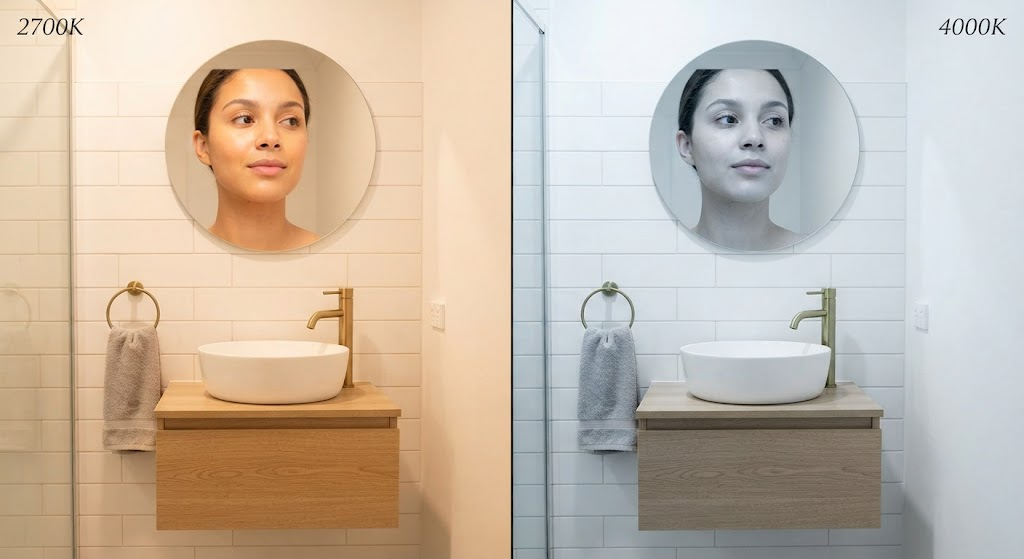
Most people choose a bathroom light fixture based on the metal finish or the shape of the glass. Then they screw in whatever bulb is in the junk drawer and wonder why the room looks like a gas station restroom. The fixture is the frame. The color temperature is the picture.
Color temperature, measured in Kelvins, describes the color of light a bulb produces — from warm, amber candlelight at the low end to cool, bluish daylight at the high end. In bathrooms, the range that matters is narrow: 2700K to 4000K. But within that narrow band, the difference is everything.
What Warm White Actually Does
Warm white light sits between 2700K and 3000K. It's the color of incandescent bulbs, sunset through a window, and every hotel bathroom you've ever wanted to move into. At 2700K, light has a golden undertone that warms skin tones, softens the edges of tile, and makes a small room feel wrapped rather than exposed.
The Skin Test
Stand in front of your bathroom mirror at 7 a.m. under 4000K light, and every shadow on your face becomes a diagnosis. Under 2700K, the same face looks rested — even if you're not. That's not vanity. That's color rendering. Warm light reduces the contrast between skin texture and shadow, which is why restaurants, lounges, and high-end retail dressing rooms all use it.
For a primary bathroom or a powder room where guests will see themselves in the mirror, I spec 2700K on every dimmable circuit. It makes the room feel finished and the occupants look human.
When Cool White Makes Sense
Cool white sits at 3500K to 4000K. It's crisp, neutral, and closer to midday daylight. It renders whites whiter and colors more accurately — which is why it's useful in spaces where precision matters.
The One Place I Use It
A bathroom with no natural light, used primarily for grooming. If you're applying makeup at a vanity or shaving with a straight razor, 3500K gives you truer color discrimination than 2700K. I've used 3500K in windowless studio apartment bathrooms where the client needed the light to perform like daylight. But I always put it on a dimmer, and I always warm it down in the evening.
At 4000K and above, bathroom light starts to feel institutional. Your tile looks cold. Your grout lines look dirty. Your face looks like you're being interrogated. I've never spec'd anything above 3500K in a residential bathroom, and I don't intend to start.
The Mistake That's Costing You Nothing
The most common bathroom lighting error is not a bad bulb. It's two different bulbs in the same room.
Mixing Temperatures
A 2700K ceiling fixture over a shower, paired with a 4000K LED strip over the vanity, reads as two different rooms occupying the same floor area. Your eye registers the discrepancy even if your brain doesn't name it. The room feels unsettled, disjointed, slightly off.
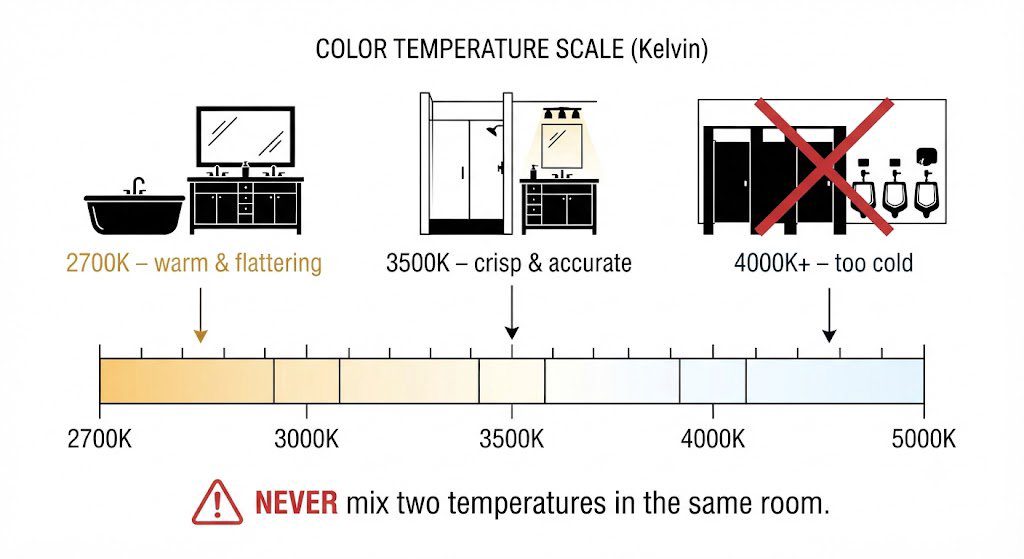
The fix costs nothing. Pick one temperature for the entire room. Buy all your bulbs from the same manufacturer on the same day. Kelvin ratings vary slightly between brands, and a 3000K bulb from one company can look like 3300K from another.
If you do nothing else to your bathroom lighting this year, unscrew every bulb, read the Kelvin number printed on the base, and make them match. It takes ten minutes, costs less than a takeout dinner, and it will change how the room feels more than any fixture swap you're planning.