
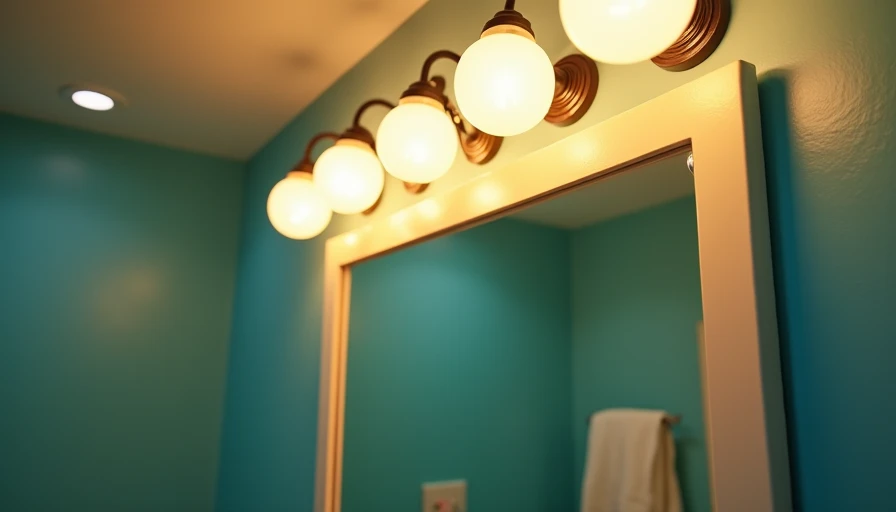
Lighting vanity lights are one of the fastest ways to make a small bathroom feel intentional rather than merely functional. In a room under 80 square feet, the fixture above the mirror is not background equipment; it is one of the first things you see. The right choice improves your morning routine, softens the room at night, and gives inexpensive tile or a basic rental vanity more presence.
I have designed enough compact bathrooms to know that the usual mistake is buying the prettiest fixture without measuring the wall. A beautiful 36-inch bar can overwhelm a 24-inch vanity, while a tiny exposed bulb may leave your face in shadow. Start with proportion, then decide on finish and style.
Start with the vanity, not the fixture
For lighting vanity lights, use the sink cabinet as your anchor. A fixture should generally be a few inches narrower than the vanity, or approximately 70 to 80 percent of its width. On a 24-inch vanity, a 18- to 20-inch bar usually looks balanced. On a 30-inch vanity, choose a fixture around 22 to 26 inches wide. This leaves visual breathing room at both ends and keeps the wall from feeling crowded.
A very small pedestal sink changes the calculation. With a 20-inch sink, two compact sconces can look more tailored than one long bar, provided each sconce is narrow enough to preserve elbow clearance. In a five-by-seven bathroom, every inch matters. Avoid fixtures that project more than about four inches if the walkway between the vanity and opposite wall is already tight.
Mounting height matters just as much. For a horizontal fixture, place the center roughly 75 to 80 inches above the finished floor, adjusting for the mirror and the height of the people using the bathroom. The goal is even light across the face, not a bright forehead and a shadowed chin.
Choose light that flatters the room
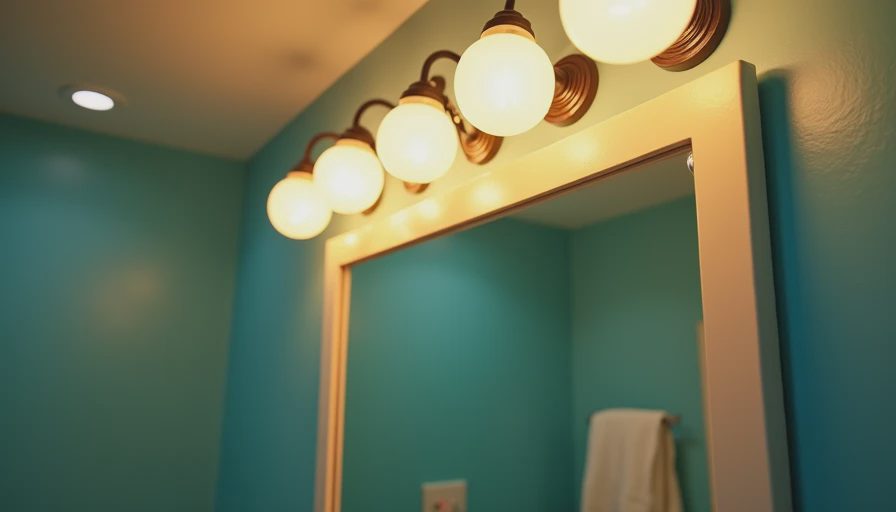
The best lighting vanity lights use a warm-to-neutral color temperature, usually between 2700K and 3000K. At 2700K, white tile looks softer and the room feels more residential. At 3000K, colors remain clear without the blue cast common in overly cool bulbs. I rarely recommend 4000K in a small bathroom unless the design is intentionally crisp and utilitarian.
Look for a high color rendering index, ideally 90 or higher. CRI describes how accurately a light source reveals colors, which matters when you are checking makeup, shaving, or choosing between two nearly identical paint samples. Frosted glass or an opal diffuser is usually more comfortable than a clear shade with an exposed filament bulb directly at eye level.
Dimmability is another small upgrade with a large effect. Bright light is useful for cleaning and getting ready, but a lower setting makes the same bathroom feel calmer after dark. Confirm that the fixture, bulbs, and dimmer are compatible. LED fixtures often have integrated light sources, so check replacement expectations before purchasing; a standard socket gives you more flexibility in a rental or budget remodel.
Sconces, bars, and the mirror relationship
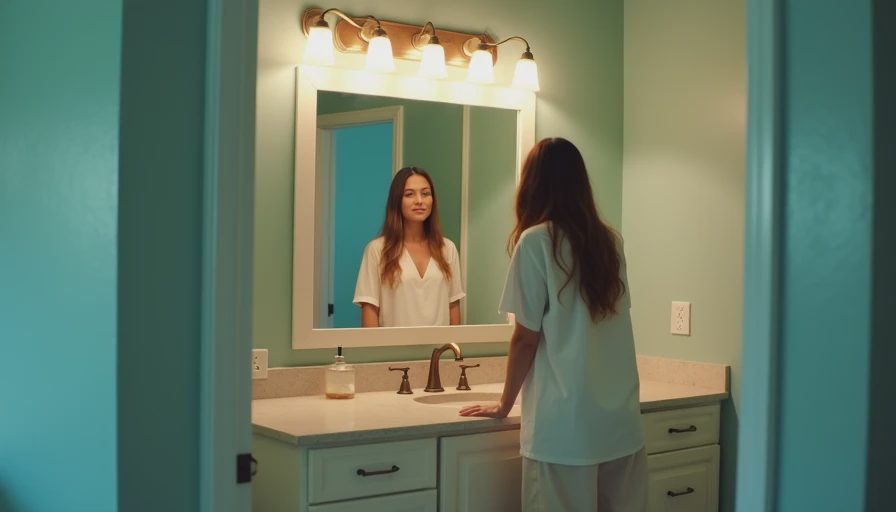
Lighting vanity lights should work with the mirror rather than compete with it. A horizontal bar above a rectangular mirror is the easiest arrangement, especially when the mirror nearly fills the wall between two corners. Keep a visible border of at least two or three inches when possible. If the bar and mirror are exactly the same width, the installation can look accidental.
Vertical sconces are often better for a narrow bathroom. Place one on each side of the mirror, with the light source near eye level. For most adults, that means the center of the fixture sits approximately 60 to 66 inches above the floor. Side lighting reduces shadows because illumination reaches both sides of the face instead of falling from only above.
A round mirror can take either approach. A slim bar above it creates a useful horizontal counterpoint, while two small sconces emphasize the circle. Do not force symmetry if the wall does not allow it. In a 30-inch-wide alcove, one centered fixture can look cleaner than two cramped sconces pushed toward the corners.
When shopping for lighting vanity lights, compare the fixture width, depth, backplate diameter, and shade direction. A backplate that is too large can collide with a mirror frame or medicine cabinet door. Those technical measurements matter more than a product photograph taken in a much larger bathroom.
Style choices that earn their space
In a compact room, lighting vanity lights should add character without introducing another competing finish. Matte black works well with white tile, oak, and concrete-look surfaces, but it can feel severe when every other element is already dark. Aged brass brings warmth to a rental-grade white vanity, while polished chrome makes sense when the faucet, shower trim, and cabinet pulls already share that finish.
Globe shades are forgiving and diffuse the light nicely, but oversized globes can read bulky above a shallow sink. Ribbed glass adds texture without taking up additional floor area. A simple cylindrical sconce is a safer choice when the tile has a strong pattern or the mirror has an ornate frame. Small bathrooms do not need every surface to make a statement.
I also like fixtures with an articulated arm when the budget allows. They can direct light toward the sink and away from a reflective mirror, although their extra projection deserves careful measurement. For a rental, plug-in picture lights or rechargeable sconces can provide a similar layered effect without opening the wall. Conceal the cord in a slim paintable raceway rather than allowing it to hang beside the mirror.
Installation and budget decisions
Replacing an existing fixture is often a straightforward cosmetic update, but electrical work still deserves caution. Turn off the breaker, verify that the circuit is not live, and use a licensed electrician when wiring is unfamiliar or the new fixture requires relocating the junction box. A new fixture cannot solve a poorly placed electrical box without additional work.
Budget about $60 to $150 for a well-designed ready-made fixture, with designer versions commonly reaching $300 or more. Add the price of compatible LED bulbs, a dimmer, and installation if those items are not already available. Brands such as Schoolhouse, Cedar and Moss, Rejuvenation, and West Elm offer distinct styles at different price points; the useful comparison is not brand prestige but dimensions, light quality, and return policy.
Before ordering, measure the vanity, mirror, wall width, existing box location, and available clearance. Tape the proposed fixture outline on the wall using painter's tape. Stand where you normally use the sink and check whether the shade would sit in your sightline. This five-minute mock-up catches many expensive mistakes.
A practical finishing checklist
Use lighting vanity lights as part of a layered plan, not as the bathroom's only source. Ceiling lighting handles general visibility, the vanity fixture supports grooming, and a small night-light or low wall light helps with late-night trips. These layers let you avoid running one harsh overhead fixture at full brightness every time you enter the room.
Then inspect the details. Are the bulbs replaceable? Does the finish coordinate with the faucet without needing to match every metal exactly? Can the mirror door open fully? Is the light comfortable when you look directly toward it? In a tiny bathroom, an extra two inches of depth or a highly reflective shade can affect the entire experience.
For most five-by-seven bathrooms, my reliable formula is a fixture 70 to 80 percent as wide as the vanity, 2700K or 3000K dimmable light, CRI 90 or better, and a diffuser that hides the harshest glare. Add side sconces when the wall allows them; choose a simple bar when it does not. The result is brighter, more flattering, and more considered without requiring a full renovation. Measure first, shop second, and let the room's dimensions make the design decision.