
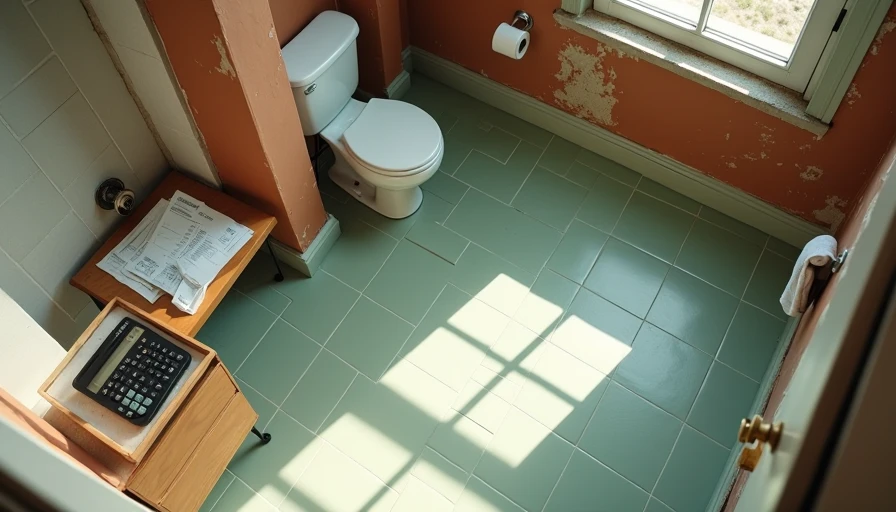
If you are asking how much does it cost to renovate a bathroom, you probably want a useful number before opening a dozen contractor tabs. For a typical small bathroom under 80 square feet, a renovation can run from about $8,000 for a controlled cosmetic refresh to $25,000 or more for a full gut renovation in a high-cost city such as Los Angeles. The range is wide because tile, plumbing, labor, permits, and layout changes all affect the final invoice.
I have designed bathrooms where moving one wall improved the entire apartment, and others where the smartest decision was leaving the plumbing exactly where it was. A beautiful result does not require demolishing everything. It requires knowing which changes create visual and functional value.
The realistic budget ranges
For a small bathroom, I usually divide the work into three practical tiers. A cosmetic update costs roughly $4,000 to $9,000 when the layout, plumbing, waterproofing, and major fixtures remain in good condition. This might include paint, a new mirror, lighting, hardware, a vanity, and refreshed flooring. It is the right approach for a dated but fundamentally sound bathroom.
A mid-level renovation typically lands between $10,000 and $18,000. That budget can cover a new toilet, vanity, medicine cabinet, lighting, tile, plumbing fixtures, and a shower or tub surround. You can use porcelain tile, a stock vanity from IKEA or The Home Depot, and a well-chosen faucet from Delta or Moen without making the room feel generic.
A full renovation often costs $18,000 to $35,000 or more. This is where people researching how much does it cost to renovate a bathroom often get surprised. Demolition, subfloor repairs, new waterproofing, custom glass, upgraded tile, and relocating plumbing add up quickly. In Manhattan, San Francisco, or Los Angeles, labor alone can push the total higher than expected.
The key is deciding whether you need a better bathroom or simply a newer-looking bathroom. Those are not always the same project.
Where the money actually goes
Labor is usually the largest line item, often accounting for 40% to 60% of the budget. A licensed plumber, electrician, tile installer, drywall finisher, painter, and general contractor each bring a different skill set. A small room does not automatically mean cheap labor; tight spaces can take longer because every cut and connection is more difficult.
Tile prices vary from around $2 per square foot for basic ceramic to $15 or more for decorative porcelain, cement tile, or handmade-look products. The installation matters just as much. A simple stacked layout is faster and less expensive than a complicated herringbone pattern with many cuts. In a 5-by-7 bathroom, choosing a $6 tile and a straightforward installation can look more intentional than spending $20 per square foot on an overworked pattern.
Fixtures create another major spread. A basic toilet may cost $150 to $300, while a sleek wall-hung model can exceed $1,000 before installation. A 24-inch vanity might cost $300, while a custom walnut version can run $2,000 or more. I often recommend spending on the pieces you touch every day, such as the faucet, shower control, and vanity hardware, while keeping the hidden infrastructure dependable and simple.
Permits, disposal, delivery fees, and project management can add several thousand dollars. Ask for these items in writing rather than assuming they are included in the headline estimate.
Layout changes: the expensive temptation
The fastest way to increase a bathroom budget is moving plumbing. Relocating a toilet can require changes below the floor, while moving a shower drain may involve structural access, new waterproofing, and additional tile work. Even shifting a vanity a few feet can require new supply lines and drain connections.
That does not mean you should never change the layout. It means the change needs to solve a real problem. In a narrow 5-by-7 room, replacing a swinging door with a pocket door can improve usable clearance more than moving the toilet. A 30-inch vanity may provide better storage than a 36-inch model if it leaves room for a wider walking path. A compact wall-mounted sink can make a powder room feel dramatically larger, though it sacrifices concealed storage.
When estimating how much does it cost to renovate a bathroom, price the layout in two versions: one that keeps plumbing in place and one that moves it. The comparison often reveals that a $3,000 design idea is actually a $10,000 construction decision.
How to spend less without making it look cheap
The best savings are strategic, not random. Keep the existing tub if it is sound, then replace the surround, controls, trim, and shower curtain or glass. Refinishing can cost less than replacement, but inspect for movement, deep cracks, or hidden water damage first.
Use one tile on the floor and shower walls instead of buying three competing materials. A 2-by-8 white or softly colored porcelain tile can feel tailored when the grout color and layout are deliberate. Large-format tile can reduce grout lines, but it is not always cheaper because the walls must be flatter and installation requires more handling.
Stock sizes are another reliable cost control. A 30-inch or 36-inch vanity, standard 60-inch tub, and off-the-shelf medicine cabinet are easier to source than custom dimensions. Brands such as Kohler, American Standard, Moen, Delta, IKEA, and Rejuvenation offer products across a broad range, so you can mix a practical base with one more distinctive finish.
Do not remove the ventilation fan from the budget. A properly sized exhaust fan protects paint, grout, and cabinetry. In a small room, moisture damage is a false economy.
A sample 5-by-7 bathroom budget
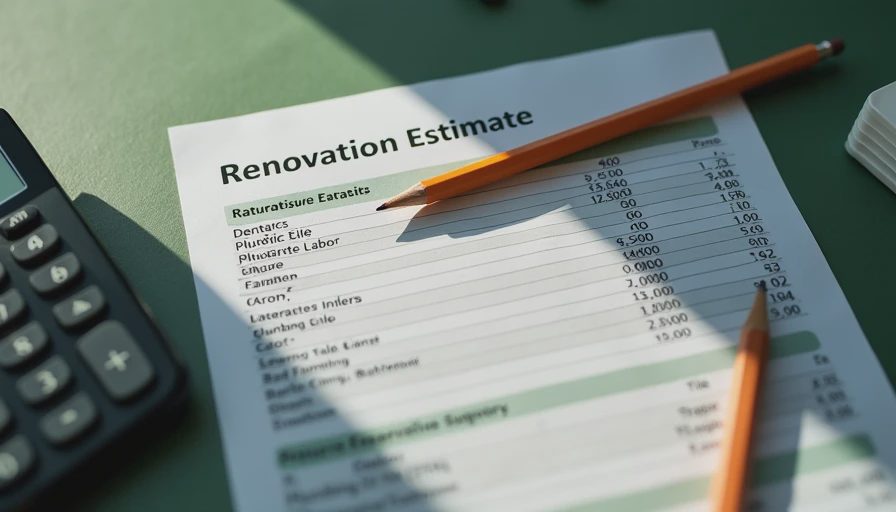
Here is a realistic mid-range example for a bathroom that keeps its existing layout: demolition and disposal, $1,200; plumbing and electrical work, $2,400; waterproofing and tile installation, $4,000; tile and setting materials, $2,000; vanity and countertop, $1,300; toilet, faucet, shower trim, and accessories, $1,400; lighting, mirror, and fan, $900; paint and finishing, $500; permits and delivery, $700; and a contingency of about $1,400. The total comes to approximately $15,800.
That contingency is not decorative padding. Old bathrooms routinely reveal corroded shutoff valves, soft subfloor areas, uneven walls, or outdated wiring once demolition begins. Setting aside 10% to 15% protects the design from being derailed by a necessary repair.
If the same project moves the toilet, enlarges the shower, and adds custom glass, the total could easily rise to $23,000 or $28,000. This is why a clear scope matters more than a glamorous inspiration image.
How to get an estimate you can trust
Start with measurements, photographs, and a short list of must-haves. Record the room's length, width, ceiling height, door swing, window location, and the centerlines of the toilet, sink, and shower drain. A contractor can price a project more accurately when the existing conditions are documented.
Get at least three detailed proposals. Compare demolition, waterproofing, tile preparation, fixture installation, permits, cleanup, and material allowances line by line. A low bid that excludes waterproofing is not a bargain; it is an incomplete number.
Ask how change orders are handled, who purchases materials, and how long the bathroom will be unusable. For a small renovation, two to four weeks of construction is common, though product delays and inspections can extend the schedule. Order long-lead items early, especially custom glass, specialty tile, and vanity tops.
The most useful answer to how much does it cost to renovate a bathroom is the one tied to your actual scope. Keep the plumbing where it works, spend on waterproofing and lighting, choose durable materials in standard sizes, and reserve money for surprises. A 35-square-foot bathroom can feel calm, generous, and distinctly yours without requiring a luxury-hotel budget.