
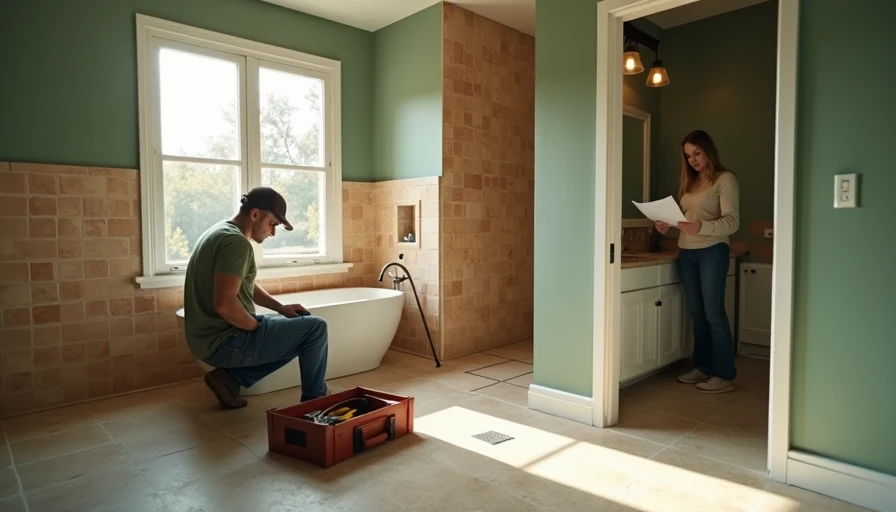
Bathroom renovation cost is usually less about the room's square footage than what you move, replace, and uncover behind the walls. A 5-by-7 bathroom can look polished without a luxury budget, but a full gut renovation with new plumbing, tile, electrical work, and custom storage adds up quickly. For a small bathroom in Los Angeles or another major metro, a sensible planning range is roughly $12,000 to $25,000 for a professional renovation. Cosmetic updates can land closer to $4,000 to $10,000, while high-end work can exceed $35,000.
The smartest budget is not the one with the cheapest tile. It is the one that spends money where it changes the room: layout, lighting, waterproofing, and the pieces you touch every day.
What Bathroom Renovation Cost Usually Includes
A professional estimate typically combines demolition, labor, materials, permits, disposal, and a contingency for surprises. Demolition might cost $1,000 to $3,000 in a compact bathroom, especially if workers must remove multiple tile layers or carry debris through an apartment building. Rough plumbing and electrical work can add another $3,000 to $8,000, depending on how far fixtures move.
The visible finishes create the widest range. A basic porcelain floor tile may cost $3 to $8 per square foot, while handmade ceramic, marble, or encaustic tile can run $15 to $40 per square foot before installation. A stock vanity from IKEA, Lowe's, or Home Depot may cost $300 to $1,200. A furniture-style vanity from brands such as Kohler, Duravit, or James Martin can push that category above $2,000.
Do not forget the small line items: shutoff valves, trim kits, mirrors, exhaust fans, towel bars, grout, waterproofing membrane, and delivery fees. Individually, these look manageable. Together, they explain why bathroom renovation cost often feels higher than the tile quote suggests.
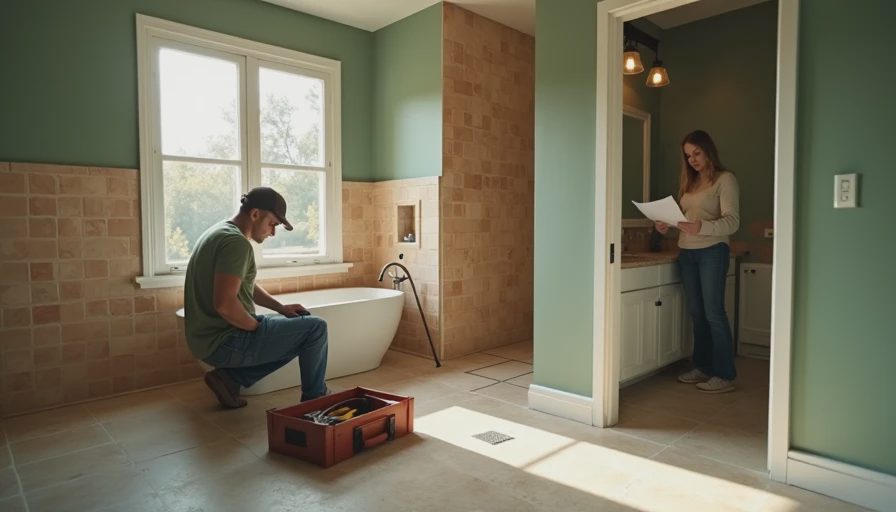
Three Budget Levels for a 5-by-7 Bathroom
At the refresh level, expect to spend about $4,000 to $10,000. Keep the existing toilet, tub or shower footprint, and plumbing locations. Paint the walls, replace the mirror and light fixture, install a new vanity, update hardware, and perhaps reglaze a dated tub. This approach works when the floor plan is functional and the waterproofing is sound.
A midrange renovation usually falls between $12,000 and $25,000. This is where many small-bath projects should land. You might replace a tub with a compact shower, install a new vanity, retile the floor, add a tiled shower surround, improve lighting, and upgrade the fan. A standard-size shower pan and readily available porcelain tile keep bathroom renovation cost under control without making the room feel generic.
A high-end renovation starts around $25,000 and can pass $40,000. Expect custom cabinetry, slab stone, specialty plumbing fixtures, heated floors, frameless glass, extensive electrical changes, or a relocated toilet. These features can be beautiful, but they are not automatically better for a small room. A complicated pattern and oversized vanity can make 35 square feet feel more crowded, not more luxurious.
The Layout Decisions That Change the Price
Moving plumbing is the fastest way to change bathroom renovation cost. Keeping the toilet, sink, and shower near their existing locations often saves several thousand dollars in labor and demolition. In a 5-by-7 layout, even a six-inch adjustment can affect the toilet centerline, door swing, and required clearances, so measure before shopping.
A wall-hung toilet can free visual space and simplify cleaning, but the concealed tank requires a suitable wall cavity and a more involved installation. A shower niche is convenient, though it requires careful waterproofing. If the budget is tight, use a surface-mounted metal shelf instead of building a niche into an exterior wall.
Consider a 24- to 30-inch vanity rather than forcing in a 36-inch model. That extra six inches can improve the walkway and keep the door from colliding with a drawer. A pocket door can solve a serious circulation problem, but retrofitting one means opening the wall and confirming that it does not contain plumbing, wiring, or structural framing.
Where to Spend and Where to Save
Spend on waterproofing, the plumbing rough-in, the exhaust fan, and task lighting. A quality waterproofing system behind shower tile protects the structure, while a properly vented fan helps control moisture and protects paint, cabinetry, and grout. Add a dimmable ceiling fixture plus a wall-mounted or mirror-integrated light at the vanity. One bright ceiling fixture creates harsh shadows on your face and makes the bathroom feel flatter.
Save on decorative tile, not installation quality. A $5 porcelain tile installed well can look more considered than a $25 tile with uneven joints. Choose one main tile in a calm color, then create interest with texture, a narrow accent, or a distinctive mirror. Large-format tile can reduce grout lines, but it is not always cheaper because the wall must be flatter and cuts around corners take skill.
You can also save by purchasing a standard vanity, selecting a widely available faucet, and keeping the existing door and window. I would rather see a simple oak-toned vanity, a good medicine cabinet, and excellent lighting than a marble countertop with nowhere to store toothpaste.

A Practical Way to Set Your Budget
Start with the maximum number you can spend, then reserve 15 to 20 percent for surprises. On a $18,000 project, that means treating roughly $15,000 as the working budget and holding $3,000 back. Hidden water damage, outdated wiring, damaged subfloor, and uneven walls are common reasons bathroom renovation cost rises after demolition.
Next, separate fixed necessities from flexible finishes. Waterproofing, code-required electrical work, ventilation, and a functioning toilet belong in the first group. Tile color, hardware finish, mirror shape, and vanity style belong in the second. Price three options for each flexible item: practical, upgraded, and splurge. This gives you somewhere to cut without abandoning the entire design.
Request written estimates that identify labor, materials, demolition, permits, and allowances. An allowance is a placeholder amount for an item you have not selected yet. If the allowance for tile is $4 per square foot and your actual choice is $12, the difference affects both materials and sometimes installation.
How to Keep a Small Bathroom From Looking Cheap
Small rooms reward restraint. Use a continuous floor tile that extends into the shower when the product and installation method allow it. Matching floor and shower tile visually joins separate zones. A clear glass shower panel can preserve sightlines, although a hinged door needs enough clearance to avoid hitting the vanity or toilet.
Storage deserves more attention than decoration. A recessed medicine cabinet can add daily function without taking wall space. For a narrow room, choose drawers over a cabinet door because drawers let you see contents without kneeling or unloading the vanity. If you rent, use a slim rolling cart, adhesive hooks rated for bathroom humidity, and a mirrored cabinet that can move with you.
Color is useful, but contrast should have a job. A darker vanity grounds a pale room; a dark wall behind a small mirror can create depth. Avoid covering every surface in a strong pattern unless you are comfortable with visual noise. In most small bathrooms, one memorable move is enough.
When a Renovation Is Worth the Cost
A renovation makes sense when the layout wastes space, the shower has recurring leaks, storage is inadequate, or finishes are failing. It is also worth considering before selling if the bathroom looks visibly neglected, though you rarely recover every dollar spent. Clean grout, fresh caulk, updated lighting, and a good mirror can deliver more impact than a complete redesign.
If the room works but looks tired, bathroom renovation cost can stay manageable with a focused plan: repaint, replace the vanity and faucet, install a new mirror, update the light, and re-caulk the tub. If the room is leaking or the subfloor feels soft, do not cover the problem with cosmetic work. Fix the structure first.
The best small bathrooms I have designed are not the ones with the most expensive materials. They are the ones where every dimension has been checked, every fixture earns its footprint, and the budget supports the decisions that last. Get two or three detailed bids, choose finishes before demolition, and protect your contingency. That process makes bathroom renovation cost predictable enough to design with confidence.