
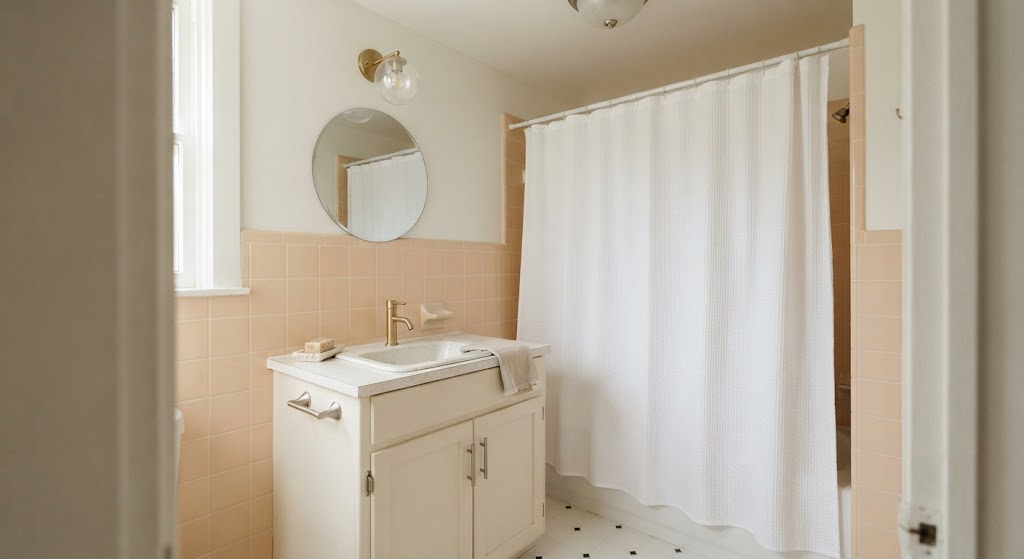
I've designed over 80 bathrooms. I've also talked at least a dozen clients out of renovating theirs. Not because their bathrooms were perfect — far from it — but because the problems they wanted to solve didn't require demolition. They required a Saturday, a caulk gun, and a willingness to see what was already there.
Before you pull a permit or sign a contract, work through these five fixes. They cost almost nothing. They take a weekend. And in enough cases to matter, they make the renovation unnecessary.
Why Most Bathroom Dissatisfaction Isn't About the Layout
When a client tells me their bathroom feels "tired" or "gross" or "dated," I ask them to list what specifically bothers them. The answers are almost never about the floor plan. They're about the cracked grout, the yellowed caulk, the dull light, the wobbly faucet handle, the mirror that's lost its silver backing around the edges.
These are maintenance problems, not design problems. And maintenance problems have maintenance solutions.
The Five Fixes
Fix 1: Regrout Where It Counts
Old grout makes clean tile look dirty. It doesn't matter how good the tile is — if the grout lines are gray and crumbling, the whole room reads as neglected. A grout refresh pen in bright white costs $8. It takes an hour to trace every horizontal and vertical line. The result is tile that looks newly installed.
For larger areas where grout is actively crumbling, use a grout removal tool to scrape out the top 1/8 inch and apply fresh sanded grout — a $20 bag covers a standard shower surround. Seal it after 72 hours. Total cost: under $30. Visual impact: transformative.
Fix 2: Recaulk Every Wet Edge
Nothing ages a bathroom faster than the black mold creeping along the base of the toilet, the seam where the vanity meets the wall, and the joint between the tub and the tile. Remove old caulk with a plastic scraper and a utility knife, clean the joint with rubbing alcohol, let it dry completely, and apply a fresh bead of silicone caulk labeled for kitchens and bathrooms. A tube costs $8. The difference is immediate and almost shocking.
One critical rule: silicone caulk requires a full 24 hours to cure before it sees water. Don't shower in the bathroom for a day after applying. If you ignore this, you'll recaulk the same seam again in six months.
Fix 3: Deep Clean Like You're Selling the Place
I mean this literally. Clean the bathroom as if a real estate photographer is arriving in two hours. Scrub the grout with a stiff brush and oxygenated bleach. Descale the showerhead by soaking it in white vinegar overnight — it probably sprays unevenly because the nozzles are clogged with mineral deposits, not because it's broken. Wipe down every surface, including the ceiling above the shower. Remove everything from the counter and the shower ledge. Put back only what you use daily.
A bathroom with empty surfaces reads as larger. A bathroom with clean grout reads as newer. Neither costs anything but time.
Fix 4: Swap Every Small Thing You Touch
Towel bar, toilet paper holder, robe hook, cabinet knobs, the switch plate, the outlet cover. Buy new ones in a single finish — brushed nickel, matte black, or unlacquered brass — and replace every piece in one afternoon. The entire set costs $80 to $150 from a single brand. The old hardware comes off with a screwdriver.
These are the only things your hands make contact with in a bathroom. When they're dated or mismatched, the whole room feels like a rental you never bothered to personalize. When they're consistent and solid, the room feels intentional even if nothing else has changed.
Fix 5: Change the Bulb Temperature
I've written an entire piece on color temperature, but it belongs on this list too. If your bathroom has a single 4000K cool-white bulb in the ceiling fixture, replace it with a 2700K warm-dim LED. The room instantly shifts from clinical to calm. One bulb, $12, two minutes. It's the cheapest renovation you'll ever do.
Try This First, Renovate Later
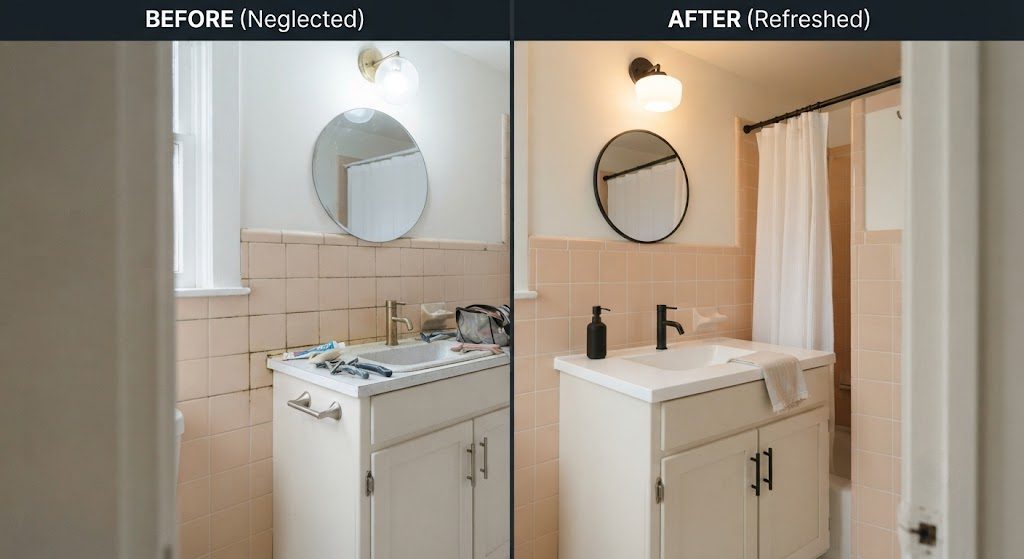
Do all five fixes in one weekend. Spend the $200. Live with the result for a month. If the bathroom still bothers you after that, you've identified a real design problem and you should renovate with confidence. But if the bathroom suddenly feels fine — or even good — you just saved yourself $8,000 and several weeks of construction dust. That's a win by any measure I care about.
I've had clients cancel renovation plans after doing this list. I've also had clients do the list, confirm the bathroom still didn't work for them, and then renovate with much clearer priorities. Both outcomes are correct. The only wrong outcome is tearing out a bathroom that just needed cleaning and new caulk.